NOV - DEC 2026 | UNREAL ENGINE 5.8 / C++ PROJECT
RINGCRAFT - Phase 1
A planned C++ conversion of the game that started my Unreal Engine journey.
I built RINGCRAFT in Unreal Engine 4.27 using Blueprints in 2024. Now I want to return to its turn-based combat with the C++ experience I have gained since then. My goal is to understand and improve the structure behind the game, while keeping the commands, abilities, and progression that make its battles work.
Planned work, not yet started. Target engine: Unreal Engine 5.8. Expected completion: December 2026.
View the 2024 game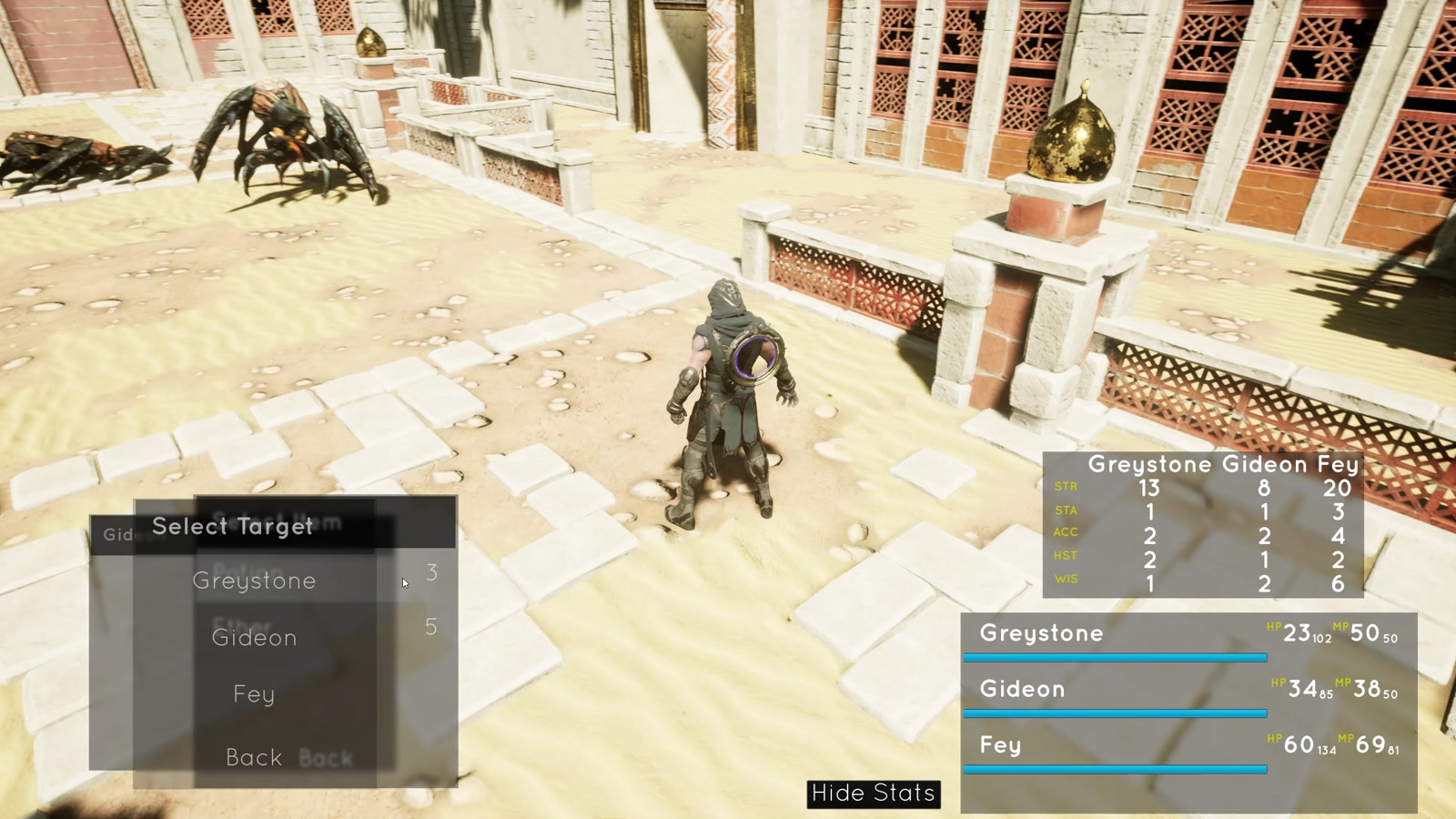
Direction
What I want to achieve
Phase 1 will focus on one complete, playable battle. The player should be able to choose an action, select a valid target, spend the appropriate resources, resolve the result, and move to the next turn. A victory should lead to rewards and character progression. I want that loop to have clear ownership in C++, with the interface reacting to the game's state rather than deciding the rules itself.
I intend to keep Blueprints useful for presentation, animation hooks, and tuning, while moving the combat rules and state transitions into code. The conversion should make it easier to trace a problem, change an ability, and add a new mechanic without spreading the same rule across several graphs.
Starting point
Understand the existing game first
I will begin by reviewing the 4.27 project and its recorded gameplay. I want to map how the battle game mode, player controller, units, ability Blueprints, and widgets currently communicate. That inventory will identify which systems own turn order, targeting, health and mana, damage, and victory rewards, and where their responsibilities overlap.
Before changing the logic, I will write down representative battle scenarios and expected outcomes. These will become a reference for the conversion. I will preserve the original project and work in a separate version-controlled UE 5.8 project, checking asset and plugin compatibility before bringing over the content needed for the first battle.
Architecture
Give each system a clear responsibility
I plan to separate battle flow, unit state, ability definitions, and presentation. These responsibilities are a starting design; I will adjust their boundaries as I test the first working battle.
- Battle flow: a C++ coordinator will manage explicit states such as selecting an action, selecting a target, resolving the action, advancing the turn, and ending the battle. It will prevent another command from starting while an action is still resolving.
- Units and resources: focused UActorComponent classes will hold battle-related behaviour such as health, mana, and whether a unit can act. Validation and resource changes should follow one path rather than being repeated by individual widgets.
- Abilities and balance data: UDataAsset and, where useful, UDataTable structures will describe costs, target rules, and effect values. Ability execution will read that data so I can rebalance content without rewriting the underlying rule.
- UI and presentation: events or delegates will notify UMG widgets when a turn, resource, or result changes. I will review existing casts and Event Tick use, replacing unnecessary polling where an explicit event is more suitable.
- Persistent state: I will assess a UGameInstanceSubsystem for party information and earned rewards that must survive beyond a battle. Battle actors and temporary effects will remain owned by the battle itself.
Implementation
Build and verify the loop in small steps
- Establish the baseline. Document the existing flow, identify dependencies, and prepare a UE 5.8 project containing only the assets and systems needed for a representative battle.
- Make a basic turn work. Start with one party member, one enemy, and one attack. Implement the turn states, target validation, damage application, and the transition back to the next valid actor.
- Make abilities data-driven. Introduce shared ability definitions, resource costs, and effect resolution. Use an attack and a healing ability to check that the same structure can support different behaviours.
- Reconnect the interface. Bind command menus, target selection, and status displays to the C++ state. Keep input validation in the gameplay systems and expose the information the widgets need.
- Restore the full battle. Bring back the three-character party, enemy turns, defeat handling, and the victory sequence. Check that rewards are applied once and that starting another battle resets temporary state.
- Review and document. Test edge cases, remove unnecessary dependencies, and record the resulting battle. Select code excerpts that explain the design decisions and record any remaining limitations.
Verification
Check behaviour, not just compilation
A successful build will only be the starting point. I will compare the converted battle against the baseline scenarios, then test failures that are easy to miss during a normal playthrough. Where rules can be exercised independently, I plan to add repeatable C++ tests with controlled inputs and outcomes.
- An ability must reject an invalid or defeated target without spending resources.
- Insufficient mana must leave both the turn state and resource values consistent.
- Repeated input during an animation must not execute an action or charge its cost twice.
- Turn order must skip units that can no longer act and reach a valid win or loss state.
- Health and mana must remain within their intended limits after damage, healing, and costs.
- Victory rewards must be granted once, and a new encounter must begin without stale targets or UI state.
I will also inspect the remaining Tick work and runtime dependencies. Any performance improvement I describe later will need a measurement and a reproducible comparison; moving logic into C++ alone is not evidence that it is faster.
Milestone
What I will show when Phase 1 is complete
My completion goal is a playable UE 5.8 battle with C++ turn control, data-driven abilities, working UI feedback, and a complete reward sequence. I plan to publish a short gameplay recording, selected code excerpts, an explanation of system responsibilities, and a summary of the behaviour checks I ran.
I also want to explain the trade-offs: what stayed in Blueprints, what moved to C++, which boundaries changed during development, and what I would improve next. This phase is deliberately focused on the combat foundation. The connected multi-scene loop and mobile work belong to later milestones, so they will not be used as completion criteria for this conversion.
Planned development window: November-December 2026. Expected completion: December 2026.